Material Hauling
You cleared the lot. Or you dug the foundation. Or the crew finished the build and left you standing in front of a pile that’s taller than it looked yesterday. Either way, nothing else happens until that material moves. Dirt hauling and debris removal is the quiet step that sits between “almost done” and “actually done,” and when it stalls, the whole project stalls with it. That’s usually why people call us here in Hickory — not because they love trucks, but because a pile of stumps, spoils, or broken concrete is blocking the next thing on their list.
Material Hauling in Hickory, NC
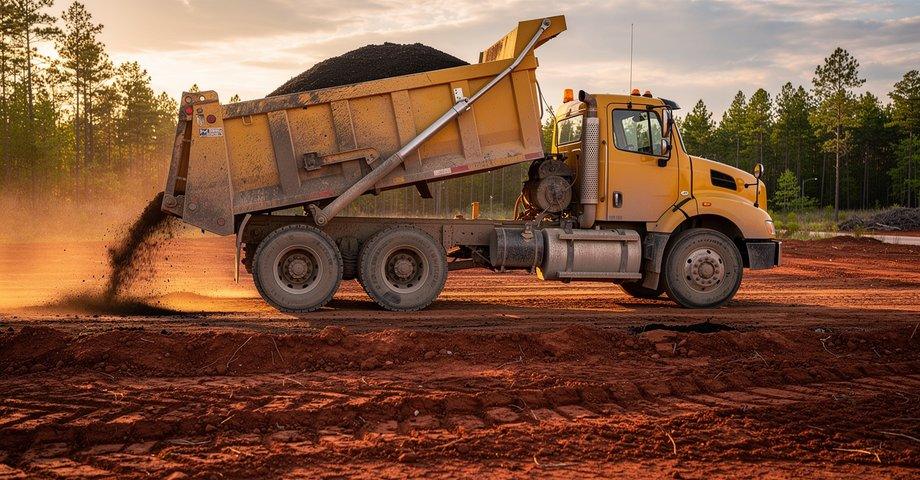
We haul material in and out of job sites across Hickory and the surrounding area. That covers debris removal when a lot gets cleared, hauling off excavation spoils after a dig, bringing in fill dirt or gravel when a site needs it, and clearing out the leftover mess once construction wraps up. If you’ve got something that needs to leave your property, or something that needs to show up on it, that’s the work. We run our own fleet of trucks and trailers, including dump trucks, so we can handle short runs or long distances, whether the job needs one truck or several. No guessing games about who does what — we load it, we move it, we leave the site workable. Whether you’re a homeowner off a residential road or a contractor running a build, the hauling part looks the same: get the material where it belongs so the project can keep rolling.
Hauling Off and Hauling In
Material hauling runs two directions, and most jobs need one or both. On the way out, we’re clearing land clearing debris — the brush, limbs, and stumps left after a lot gets opened up. We haul excavation spoils, the dirt and rock pulled out when someone digs a foundation, basement, or pool. We handle general site cleanup material and construction debris too, the broken concrete and scrap that piles up by the end of a job.
On the way in, it’s the opposite problem. A site might need fill dirt to bring a low spot up to grade before anything gets built. It might need topsoil for the areas that’ll eventually grow grass. Or it needs gravel and aggregate for a driveway, a pad, or a base layer. Point is, if your project is waiting on material arriving or material leaving, that’s squarely what we do.
One Contractor From Clearing to Cleanup
Here’s the part that saves people the most headache. We’re a land clearing operation first, and debris removal is part of that same work. So when we clear or dig a site, the hauling isn’t handed off to some separate trucking outfit you have to track down, schedule around, and babysit. It’s us. One phone call, one crew, one schedule.
That matters more than it sounds like it should. When your clearing contractor and your hauler are two different companies, you end up playing middleman — coordinating who shows up when, explaining the same site access twice, and waiting while a pile sits there because the second vendor is booked. When it’s one outfit handling the material from the moment it’s created to the moment it leaves, that gap just closes. The pile doesn’t sit around waiting on somebody else’s calendar.
If that sounds like the kind of thing that’d make your project easier, give us a call at 828-503-5767 and we’ll talk through what your site needs.
How a Hauling Job Works
If you’ve never hired a hauler before, here’s roughly how these jobs tend to go, so there aren’t any surprises. First, we look at what you’ve got and how we can get to it — the type and amount of material, and whether a truck can actually reach it without tearing up half your yard. That drives everything else. Second, you get a quote based on what we see, not a vague number over the phone.
Third, we load and transport. The material comes out, or the fill comes in, depending on the job. And fourth, we check the site before we call it done — making sure the area’s left clear and workable, not just empty of the pile but ready for whatever’s next. Access and surface conditions get sorted out up front, so nobody’s surprised by where the truck has to park.
Projects That Need a Hauler
Most hauling calls come from a handful of situations. Someone clears a wooded lot in Denver or Lenoir and is suddenly staring at a mountain of brush and stumps with nowhere to put it. A builder digs a foundation and needs the excavation spoils gone before framing. A homeowner near Mooresville is prepping a build site and needs fill dirt trucked in before the grading can even start. Or a job wraps up around Hickory or Huntersville and there’s a round of post-construction cleanup — scrap, debris, leftover material — standing between the crew and the final walkthrough.
Different projects, same bottleneck. Material in the way, or material missing, and work that can’t move until it’s handled. If your situation sounds like any of those, you’re in the right place.
What to Ask Any Hauling Contractor
Before you hire anyone to haul material, a few questions will tell you a lot. Ask how the job is priced — is it per load, by the material, by how far it has to travel? Ask who’s responsible for site access and protecting your driveway and yard, because that should be settled before a truck ever rolls in. And ask whether the hauling is actually part of the site work or quietly subcontracted out to someone else, since that changes who you’re really dealing with.
We’d rather you ask those questions than not. We answer all of them on a quote call, based on your specific site — not with canned numbers that fall apart the moment someone looks at the actual pile.
Get Your Hauling Quote
A real quote depends on three things: what the material is, how much of it there is, and how easy your site is to get to. That’s why a quick call beats a guess every time. Reach us at 828-503-5767 or email larry@bulletprooflandclearing.com, tell us what you’re looking at, and we’ll get you a straight number so your project can start moving again.
Frequently Asked Questions
Do you haul material for projects you didn’t clear?
Yes. We take on large and small hauling jobs, whether or not we did the clearing. Call and describe the material and where it needs to go, and we’ll get it scheduled.
What’s the difference between fill dirt and topsoil?
Fill dirt is used to add volume and structure — raising low spots or bringing a site up to grade before building. Topsoil is the richer upper layer meant for growing things, so it goes down where you want grass, plants, or a garden later.
How is material hauling priced?
Pricing comes down to the type of material, how much there is, how far it has to travel, and how reachable the pile or drop spot is. Because those vary so much job to job, we give you a number after we understand the specifics rather than quoting blind.
Will dump trucks damage my driveway or yard?
That’s a fair thing to worry about, and it’s exactly why we look at access and surface conditions before any loading starts. Knowing where a truck can safely go ahead of time keeps the job from doing damage you didn’t sign up for.
How far ahead should I schedule hauling?
It depends on the size of the job and the time of year, since busier seasons fill up faster. There’s no hard rule, but reaching out earlier generally gives you more room to pick a time that works for your schedule.
Do I need to be on site during pickup or delivery?
What matters most is clear access and knowing exactly where material should be picked up or dropped. Whether you need to be present depends on the job, so we’ll confirm that with you when we book it.